
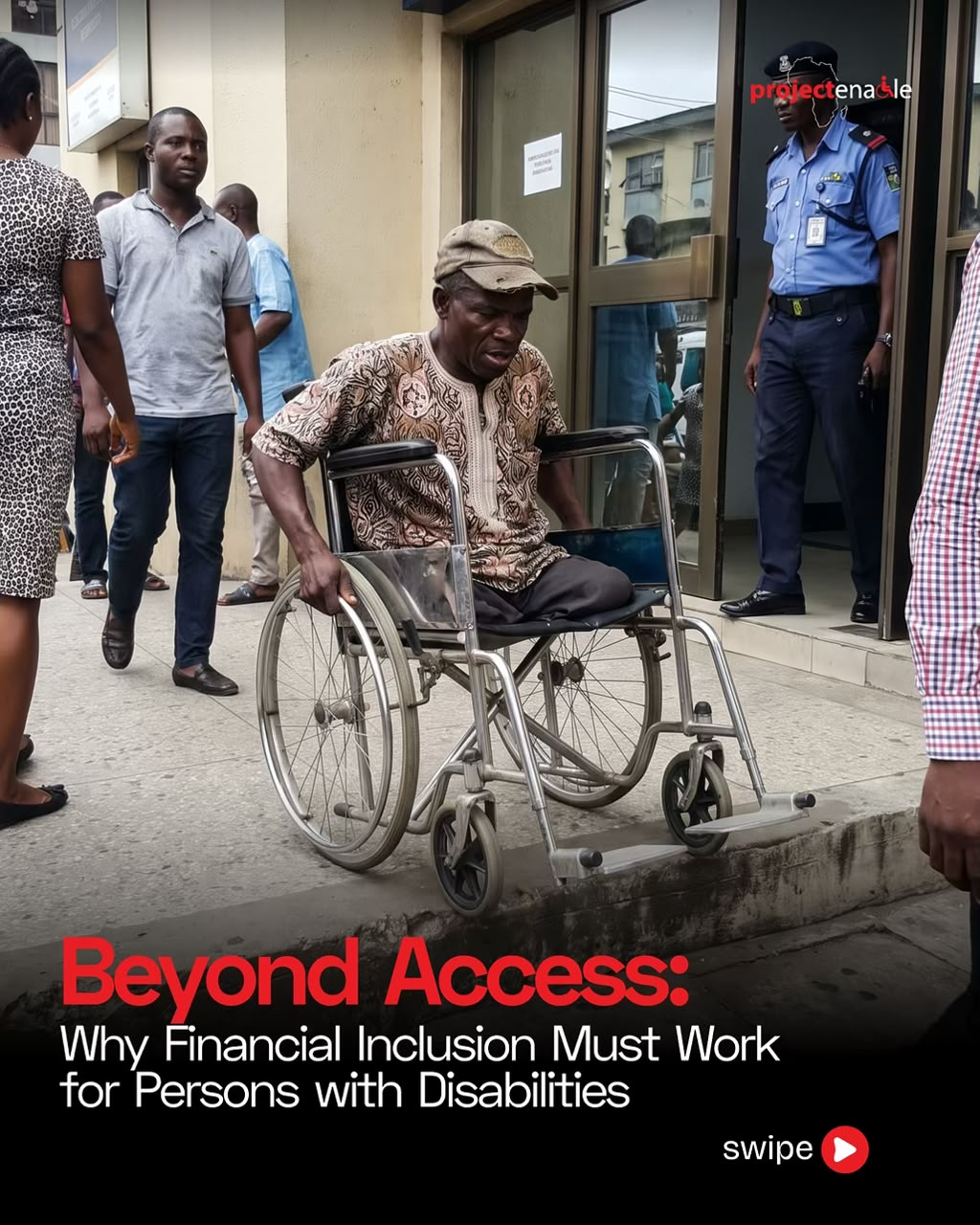
Beyond Access: Why Financial Inclusion Must Work for Persons with Disabilities
When conversations around financial inclusion come up, the numbers often sound encouraging. More Nigerians are opening bank accounts. Digital payments are growing. Mobile banking is becoming more common.
But beneath these milestones lies a critical question:
Who is still being left behind?
For millions of persons with disabilities in Nigeria, financial inclusion is about far more than owning a bank account. It is about whether they can independently access financial services, navigate banking halls, use ATMs, complete digital transactions, receive information in accessible formats, and participate fully in the country’s financial system.
True financial inclusion isn’t measured by the availability of services alone. It is measured by whether those services are accessible, equitable, and designed for everyone.
Financial Inclusion Is More Than a Number
A person may have a bank account and still face barriers every time they need to use it.
Imagine arriving at a bank branch that has no accessible entrance. Or trying to use a banking application that cannot be navigated with a screen reader. Or needing assistance because customer service staff have never been trained to communicate effectively with persons with disabilities.
These are not isolated experiences. They represent everyday realities that continue to limit financial independence for many Nigerians.
Financial inclusion should empower people to save, invest, borrow, make payments, and build financial security. When barriers prevent people from doing these things independently, inclusion remains incomplete.
Why Accessibility Matters
Accessible financial services benefit everyone.
For persons with disabilities, accessibility means independence, dignity, confidence, and equal participation in economic life.
For financial institutions, accessible services expand their customer base, strengthen trust, improve customer experience, and demonstrate compliance with national laws and international best practices.
For governments and regulators, inclusive financial systems contribute to poverty reduction, economic participation, and sustainable development.
Accessibility is not an added feature. It is an essential component of inclusive development.
Understanding the Gaps
Earlier this year, Project Enable Africa embarked on a nationwide study to better understand the financial experiences of underserved populations, particularly persons with disabilities.
The research sought to answer important questions:
- What barriers do persons with disabilities encounter when accessing financial services?
- Are physical banking spaces designed for everyone?
- Are digital financial platforms accessible?
- What changes are needed to make Nigeria’s financial system more inclusive?
Over the past several months, we have gathered evidence, listened to lived experiences, and analysed data that reveals important insights into the current state of financial inclusion.
The findings highlight both areas of progress and significant opportunities for improvement.
Why This Research Matters
Evidence drives change.
Without reliable data, it becomes difficult for policymakers, financial institutions, development partners, fintech companies, and disability advocates to identify where gaps exist and how best to address them.
This research was designed to contribute to that evidence base.
It provides practical insights and recommendations that can support more inclusive financial products, better customer experiences, stronger policies, and greater accountability.
Most importantly, it centres the voices and experiences of persons with disabilities—voices that are too often absent from conversations about financial inclusion.
Coming Soon
In the last week of August, Project Enable Africa will officially launch its Financial Inclusion Report, an open-source publication that presents the findings of this research alongside actionable recommendations for financial institutions, regulators, policymakers, development organisations, and other stakeholders.
We believe that meaningful inclusion begins with understanding the barriers that exist—and working together to remove them.
Because financial inclusion should not be measured by how many people have access to financial services.
It should be measured by how many people can use those services safely, independently, and with dignity.
Stay connected as we prepare to launch this important report and continue the conversation on building a financial system that truly works for everyone.