
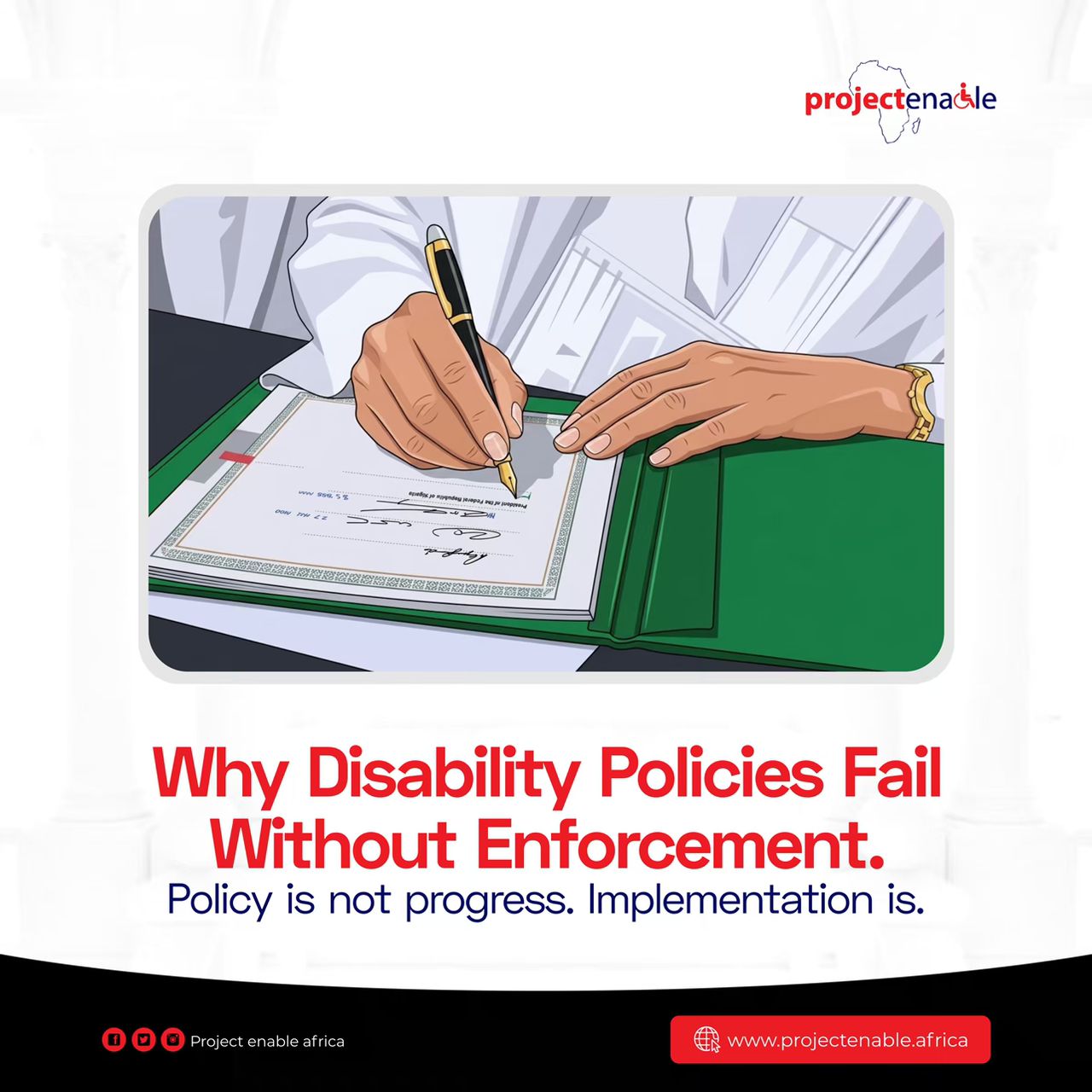
Policy is not progress. Implementation is.
On paper, progress looks good, and that is why Disability Policies Fail Without Enforcement
Countries pass disability laws. Organizations claim inclusion. Policies are signed and celebrated.
But in reality, many persons with disabilities still face the same barriers every day.
Because signing is easy, but implementation is the real work, and this is where things often fail.
The Real Problem
The issue isn’t the absence of policies. It’s the absence of accountability.
Many disability frameworks lack:
- Clear enforcement mechanisms
- Measurable outcomes
- Consequences for non-compliance
So policies exist, but are not practiced.
A workplace claims inclusion but remains inaccessible.
A law guarantees rights, but no system ensures they are upheld.
From Words to Action
For too long, Organizations of Persons with Disabilities (OPDs) have been limited to consultation hearings, but not empowered.
That should change.
Organizations of Persons with Disabilities must move beyond being consultants to becoming active monitors of implementation, ensuring that commitments translate into real change.
What Needs to Happen
To close the gap, we need:
- Strong enforcement structures
- Transparent reporting and tracking
- Clear accountability for institutions
- OPDs involved in monitoring, not just discussions
Signing a policy is not success, Implementation is.
Policy is not progress. Implementation is.